
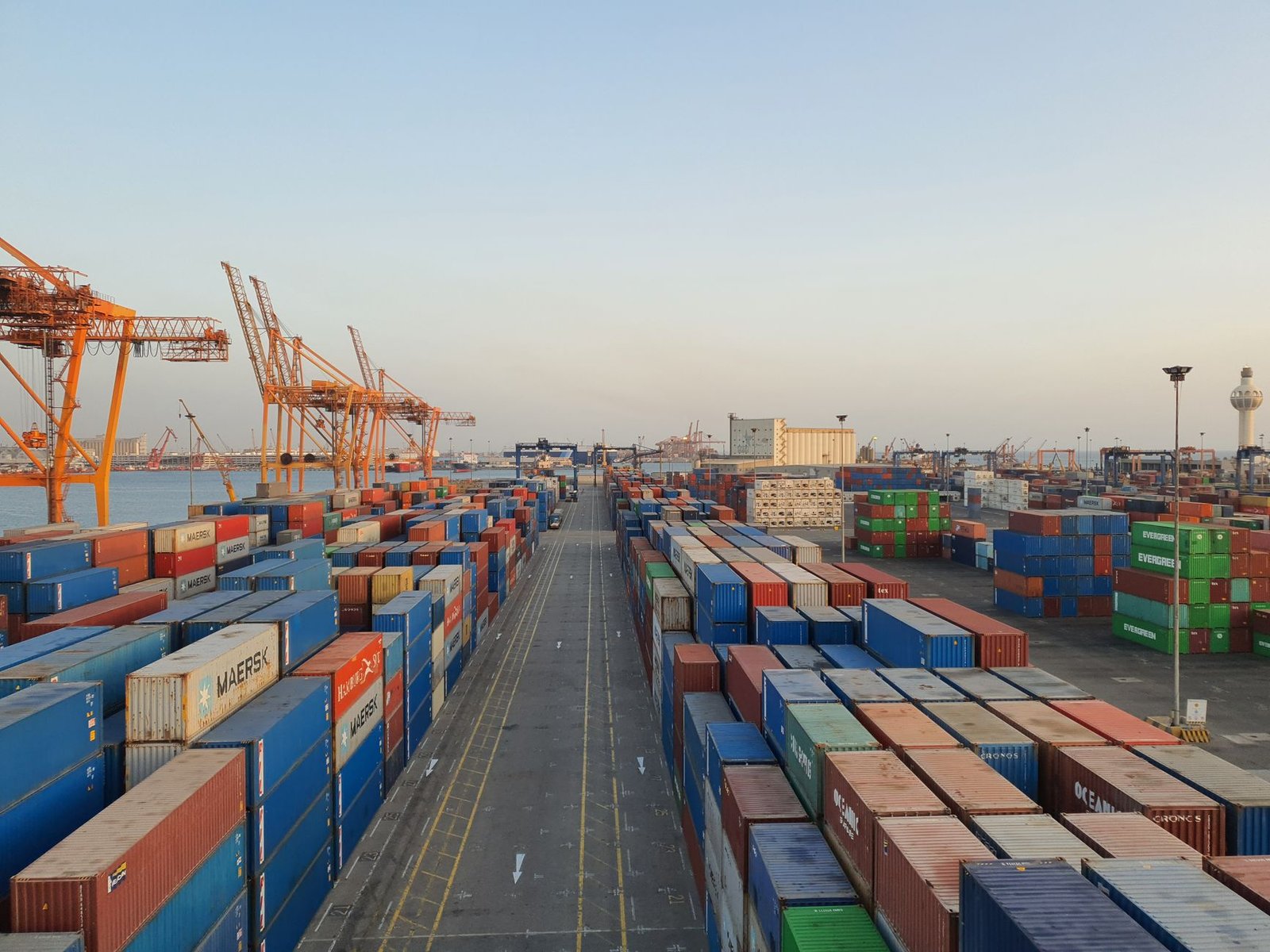
A container sitting at the border for three weeks because of one wrong field on a commercial invoice is not a logistics problem. It is a customer-relationship problem, a cash-flow problem, and — the third time it happens — a reputation problem.
Quick answer: Exporting into the EU requires a core document set: a commercial invoice, a packing list, an export declaration filed under the correct commodity code, a transport document, and proof of origin if you want preferential (zero) duty. Conditional documents sit on top — an export licence for controlled or dual-use goods, an ATA Carnet for temporary movements, dangerous goods paperwork, and proof of export to zero-rate the supply for VAT. Most delays come from mismatches between these documents, not from missing ones.
This checklist is written for manufacturers and engineering firms selling technical products into the EU, not for freight forwarders. It covers what each document is for, who produces it, what goes wrong, and what changed in 2026.
Why this guide exists: At IndustrySpan we work with industrial SMEs whose export administration was built one shipment at a time. Almost always, the paperwork isn’t missing — it’s inconsistent. The invoice says one thing, the packing list says another, and customs believes neither.
1. The core export documents, explained
“We had a container held at the border for three weeks over a paperwork error.”
This is the single most common export failure we see, and it is almost never exotic. It is one of these five documents being wrong or contradicting another one.
| Document | What it does | Who produces it | The mistake that causes delay |
|---|---|---|---|
| Commercial invoice | The legal and valuation basis for customs clearance | Exporter | Vague goods description; missing HS/CN code; no Incoterm; value inconsistent with the declaration |
| Packing list | Ties physical cargo to the invoice — weights, dimensions, package counts, marks | Exporter | Package count or gross weight that doesn’t match the transport document |
| Customs declaration | The formal entry filed with the customs authority — an export declaration on the way out (which generates a Movement Reference Number, or MRN) and an import declaration on the way in | Exporter, importer, or customs agent | Wrong commodity code, which drives duty, VAT and restrictions |
| Transport document (CMR, air waybill, bill of lading) | Evidence of the contract of carriage and, for a B/L, title to the goods | Carrier / forwarder | Consignee details that don’t match the invoice or the declaration |
| Proof of origin | Unlocks preferential (usually 0%) duty under a trade agreement | Exporter | Claiming preference the goods don’t actually qualify for |
The commercial invoice is the document that matters most
Everything else is checked against it. A customs-grade commercial invoice needs: full exporter and importer details including the importer’s EORI number and, where relevant, VAT number; a goods description specific enough that an officer who has never seen your product can classify it; the HS/CN code; quantity, unit price, total value and currency; the applicable Incoterms 2020 rule with the named place; and a country-of-origin statement.
“Machine parts” is not a goods description. “Stainless steel centrifugal pump impeller, 316L, 180 mm, for food-processing pumps” is.
Get the commodity code right, once
The commodity code determines your duty rate, your import VAT, whether a licence is needed, and whether the goods fall under regimes like CBAM. The EU’s Combined Nomenclature is updated annually and the CN 2026 version applies from 1 January 2026. Classifications you set years ago are worth re-checking — subheadings move.
For classification, duty rates and country-by-country requirements, the European Commission’s Access2Markets portal is the authoritative free tool, and it is the one we point clients to before they call a broker. The Commission published the 2026 version of the Combined Nomenclature on 31 October 2025.
The documents that apply in specific situations
The five above cover most consignments. These next ones apply conditionally — and because they are conditional, they are the ones that get forgotten until a shipment is already stopped.
Proforma invoice. Issued before the sale is final, so the buyer can arrange finance, a letter of credit or an import licence. It is not a customs document in its own right, but a proforma that disagrees with the eventual commercial invoice creates questions you don’t want asked.
Export licence. Required for controlled goods, and this catches far more industrial manufacturers than expect it. Dual-use items — goods, software and technology with both civilian and potential military application — are controlled under the EU dual-use regime, and the category is broader than most engineers assume. Certain machine tools, high-specification bearings, sensors, thermal imaging, encryption, valves and pumps for particular service conditions, composite materials and the associated technical data can all fall in scope. So can the technology transfer itself: sending a drawing or a specification to a foreign subsidiary can be a controlled export even with no physical shipment.
If you sell anything with a possible defence, aerospace, nuclear, chemical or advanced-materials application, classify against the control list before you quote — not after you have a purchase order.
ATA Carnet. The document that lets you take goods temporarily into a country without paying duty or import VAT — demonstration equipment, exhibition stands, test rigs, tooling for on-site commissioning. For a manufacturer whose commercial calendar runs on trade fairs, this is the most commonly needed and least understood document on the list. It is issued by chambers of commerce, has to be arranged in advance, and must be correctly discharged on the way back out or you get billed as though you sold the goods.
Dangerous goods documentation. A dangerous goods note or shipper’s declaration, with correct UN numbers, packing group and classification. Applies to more than obvious chemicals: lithium batteries in a control unit, pressurised components and certain lubricants and coolants all trigger it.
Proof of export for VAT zero-rating. Distinct from customs clearance and frequently confused with it. To zero-rate an export supply for VAT, you must hold and retain commercial or official evidence that the goods physically left. Clearing customs is not automatically the same as holding the evidence your tax authority will want in an inspection. Confirm what your own tax authority accepts and file it deliberately.
Transport instruction documents. A shipper’s letter of instruction, export cargo shipping instruction or standard shipping note tells the forwarder what to do. Not a customs requirement, but the document that determines whether the customs paperwork gets filed correctly on your behalf.
2. Proof of origin: where zero duty is won or lost
“We assumed the trade agreement meant no duty. It doesn’t work like that.”
A trade agreement doesn’t make your goods duty-free. It makes qualifying goods duty-free, and only if you can prove it in the right format.
Under the EU–UK Trade and Cooperation Agreement, goods must be wholly obtained in the UK or EU, or satisfy the product-specific rule for their HS heading in TCA Annex 3. If they don’t, the standard MFN duty applies regardless of what any certificate says.
There are two accepted formats for UK–EU trade:
- Statement on origin — the prescribed wording from TCA Annex ORIG-4, placed on the commercial invoice or another commercial document describing the goods in enough detail to identify them. Above €6,000 the exporter must quote a registered exporter (REX) reference; at or below €6,000 any exporter can self-certify.
- EUR.1 movement certificate — issued by the customs administration of the exporting country on the exporter’s request.
For other preferential partners the EU’s rules differ by agreement. The Commission’s guidance on proof of origin explains invoice declarations, approved exporter status and the REX self-certification system, under which registered exporters issue statements on origin themselves.
Keep the evidence. Origin claims are auditable years after the shipment clears. Supporting records for UK–EU origin claims must be retained for four years. A retrospective origin audit that you cannot support turns a duty saving into a duty bill plus penalties.
3. Incoterms 2020: who is actually responsible for what
“We quoted DDP without really knowing what we’d signed up for.”
Incoterms 2020, published by the International Chamber of Commerce, allocate cost, risk and — critically — customs obligations between seller and buyer. Two rules cause most of the trouble for manufacturers new to EU export:
- EXW (Ex Works) looks simple and shifts almost everything to the buyer. But the buyer must then handle export formalities in your country, which they often cannot do, and you may struggle to obtain proof of export.
- DDP (Delivered Duty Paid) is the maximum-obligation rule for the seller. You become responsible for import clearance, import duty and import VAT in the destination country — which can mean needing a VAT registration or a fiscal representative there. Sellers quote DDP to sound accommodating and then discover the compliance footprint they’ve acquired.
For most industrial SMEs shipping into the EU, DAP (Delivered at Place) or FCA (Free Carrier) give a cleaner split of responsibility. Whatever you choose, the rule and the named place must appear identically on the quotation, the order confirmation, the contract and the invoice.
4. What’s changed for 2026 — and what’s catching people out
This is the section most export checklists online haven’t updated. Three items are worth putting on your compliance calendar now.
CBAM is live. The Carbon Border Adjustment Mechanism’s transitional reporting phase ended on 31 December 2025 and the definitive regime applies from 1 January 2026. It covers cement, iron and steel, aluminium, fertilisers, electricity and hydrogen — which pulls in a large number of engineered products and components. EU importers bringing in more than 50 tonnes of CBAM goods per year must hold authorised CBAM declarant status; those who applied by 31 March 2026 could continue importing provisionally while their application was processed. Certificate purchasing opens in February 2027, with the first annual declaration and surrender deadline of 30 September 2027 covering 2026 imports.
Practically, for a non-EU manufacturer: your EU customer will ask you for verified embedded-emissions data. If you can’t supply it, the importer falls back on the Commission’s default values, which are deliberately unfavourable. Being the supplier who can hand over clean CBAM data is now a commercial advantage, not just a compliance chore.
The UK–EU “reset” does not remove customs paperwork. The Common Understanding agreed in May 2025 commits both sides to work towards a common sanitary and phytosanitary area, with UK legislation intended by the end of 2026 and an agreement targeted for mid-2027. It is worth being blunt about the limits: an SPS agreement is not a customs agreement. Customs declarations remain, and rules of origin under the TCA are unaffected.
Country-level differences persist inside the single market. Once goods are in free circulation the EU is one customs territory, but VAT registration thresholds, language requirements for documentation and instructions, packaging and extended-producer-responsibility registrations, and national market-surveillance behaviour all vary by member state. Germany, France and the Netherlands each have their own quirks. Assuming “the EU is one market” is the most expensive planning error we see.
5. The master checklist
Work through this before your first shipment into a new EU market.
Company-level, set up once – EORI number for the exporting entity (and confirm your EU importer has one) – Commodity codes confirmed against the current CN, documented internally – Export control classification completed — check your product range against the dual-use control list, including technical data and software – Decision on Incoterms rule, applied consistently across quotes and contracts – REX registration or approved-exporter status if you’ll ship above €6,000 regularly – Import VAT position resolved: who is importer of record, and is a VAT registration or fiscal representative needed? – Proof-of-export evidence process agreed with your tax authority’s requirements in mind – Record-retention process for origin evidence (minimum four years for UK–EU)
Per shipment – Commercial invoice with full field set and Incoterms rule – Packing list reconciled against the transport document – Proof of origin in the correct format, if claiming preference – Export declaration lodged under the confirmed commodity code; MRN retained – Transport document with consignee details matching the invoice – Export licence where the goods or technology are controlled – Dangerous goods documentation where applicable – Insurance certificate where the Incoterms rule puts insurance on you (CIF/CIP) – Evidence of export filed for VAT zero-rating
For temporary movements (trade fairs, demos, commissioning) – ATA Carnet arranged in advance through your chamber of commerce – Carnet correctly discharged on re-entry — an undischarged carnet is treated as a sale
Product-level – EU Declaration of Conformity and CE marking where applicable — see our guide to how to get CE marking – REACH obligations for substances and articles – Safety data sheets in the destination-country language – CBAM embedded-emissions data if your product falls in scope
Free download — EU Export Documentation Master Checklist. The full field-level checklist, including the commercial invoice template fields customs actually check. Request the checklist.
Related reading: Go To Market Strategy Agency for Technical Companies Entering Europe.
Frequently asked questions
What is export documentation? Export documentation is the set of commercial, transport and regulatory paperwork required to clear goods through customs, prove regulatory compliance, establish origin for duty purposes and support payment. The core set is the commercial invoice, packing list, export and import customs declarations, a transport document, and proof of origin where preferential duty is claimed. Conditional documents — export licences, ATA Carnets, dangerous goods declarations — apply depending on the goods and the movement.
What documents are used as proof of export? Proof of export is the evidence that goods physically left the customs territory, and it is what allows a supply to be zero-rated for VAT. It typically comprises official evidence from the customs system (the export declaration and its Movement Reference Number, with departure confirmed) or commercial evidence such as a signed transport document, freight forwarder’s certificate of shipment, or proof of delivery abroad. Clearing customs and holding proof of export are not the same thing — check what your own tax authority accepts and retain it deliberately.
What are the steps of the export process? In sequence: confirm the goods are not export-controlled and obtain a licence if they are; classify the goods under the correct commodity code; agree the Incoterms rule and who is importer of record; raise the commercial invoice and packing list; lodge the export declaration and obtain the MRN; arrange transport and the associated documentation; issue proof of origin if claiming preference; and retain proof of export plus origin evidence for the required period.
What export documentation do we need for each EU country? The customs document set is the same across the EU because it is one customs territory: invoice, packing list, customs declaration, transport document and proof of origin where preference is claimed. What differs by country is downstream — VAT registration and reporting, language requirements for user documentation and safety data sheets, packaging and EPR registrations, and national market-surveillance practice.
Do our certifications transfer across EU countries? Yes. A product lawfully CE marked under EU rules can be placed on the market in any member state without re-certification. What does not transfer automatically are national administrative registrations — packaging, WEEE, batteries — which are per-country.
What payment terms are standard for exporters selling into the EU? There is no single standard. In industrial B2B, 30 to 60 days from invoice is common, and some large buyers push for 90. The EU Late Payment Directive sets default limits for commercial transactions, but enforcement is a commercial conversation, not an automatic protection. Agree terms in writing before the first order and treat a 90-day request as a pricing input, not a formality.
Who handles the customs paperwork — us or our forwarder? Your forwarder or customs agent can file the declaration, but they file it on the basis of what you give them. Classification, valuation and origin remain your legal responsibility as exporter. Outsourcing the filing does not outsource the liability.
How long should we keep export records? Four years minimum for UK–EU origin evidence. Ten years for technical documentation supporting CE marking, counted from the last placing on the market. Align your retention policy with the longer of the two.
Turn export admin into an export system
Most industrial SMEs don’t have a documentation problem. They have a process problem: no single person owns the handoff between the engineer who knows the product and the administrator who knows the forms.
IndustrySpan builds that process — commodity codes documented, Incoterms decided, origin evidence retained, and a repeatable per-shipment checklist your team can actually run without you.
Book a free export-readiness audit →
Related reading: Exporting to the EU After Brexit: A Manufacturer’s Compliance Guide · How to Get CE Marking · How to Find & Appoint Industrial Distributors Abroad · Our services
Sources cited
- European Commission — Combined Nomenclature
- European Commission — Commission publishes the 2026 version of the Combined Nomenclature
- European Commission — Access2Markets
- European Commission — Proof of origin
- European Commission — Rules of origin / REX system
- European Commission — CBAM definitive regime
- House of Commons Library — The 2026 review of the Trade and Cooperation Agreement and the UK–EU reset